

Construction Stored Carbon
The world’s first open certification for carbon storage in buildings; enabling construction companies, governments and the financial sector to transform the built environment into a nature-based carbon sink.




Latest News
Quantification method published
On January 26, 2026, Climate Cleanup Foundation published a formal quantification method for Construction Stored Carbon, replacing the metric as proposed in 2021. The quantification method, titled “Bepalingsmethode materiaalgebonden CO₂-opslag” in Dutch, can be used for manual or automatic determination and calculation of Construction Stored Carbon. The method directly links to the Dutch Circularity Standard “Het Nieuwe Normaal”. Public feedback is welcomed and can be directed to csc@climatecleanup.org. First consultation round closes on May 1, 2026.
Factsheet on CSC certification published
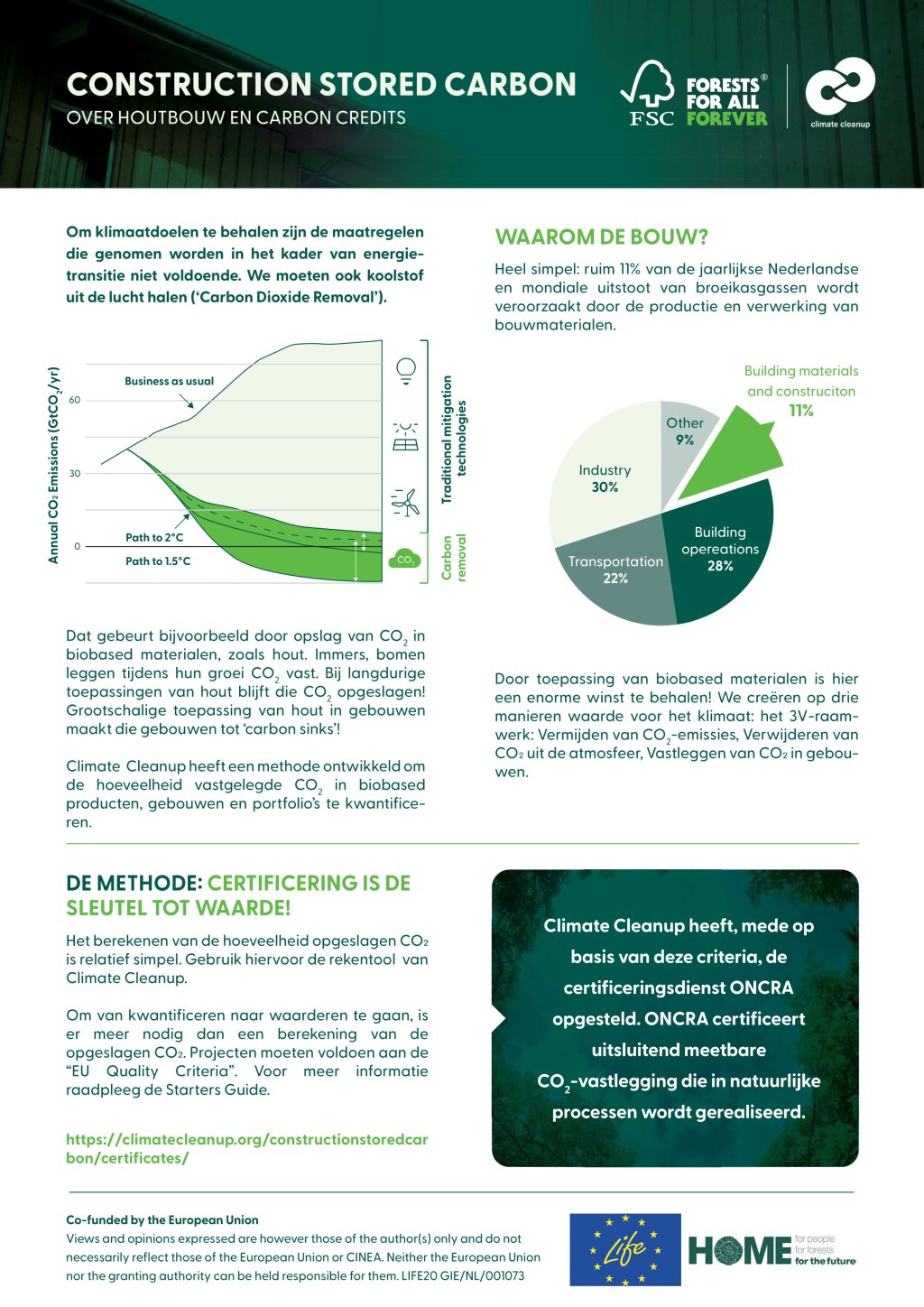
Together with FSC Netherlands we hosted a webinar for housing corporations (“woningcorporaties”) on Construction Stored Carbon and opportunities for biobased social housing. From this webinar and the resulting conversations, FSC Netherlands published a two-pager factsheet in Dutch.
Market for carbon storage launched
Climate Cleanup and biobased construction frontrunner Ballast Nedam Development signed a collaboration agreement for the carbon accounting of three development projects and launched the world’s first Construction Stored Carbon Certificates. The quantification, verification and certification of the carbon certificates happens through Oncra.

From Problem
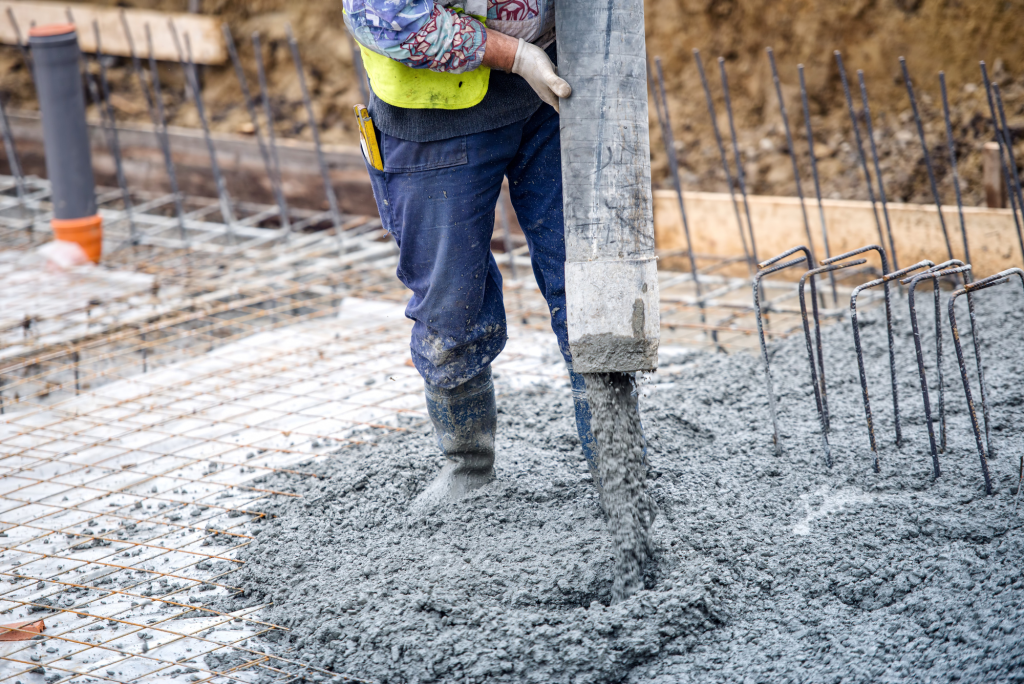
Buildings are humanity’s largest creations. They last for decades, if not centuries. And their impact does not go unnoticed: the building and construction sector is responsible for 39% of CO₂ emissions. We use 230 billion square metres of building space and another 65 billion could be added this decade. The materials we choose to build with will have an everlasting effect on generations to come.
To Solution
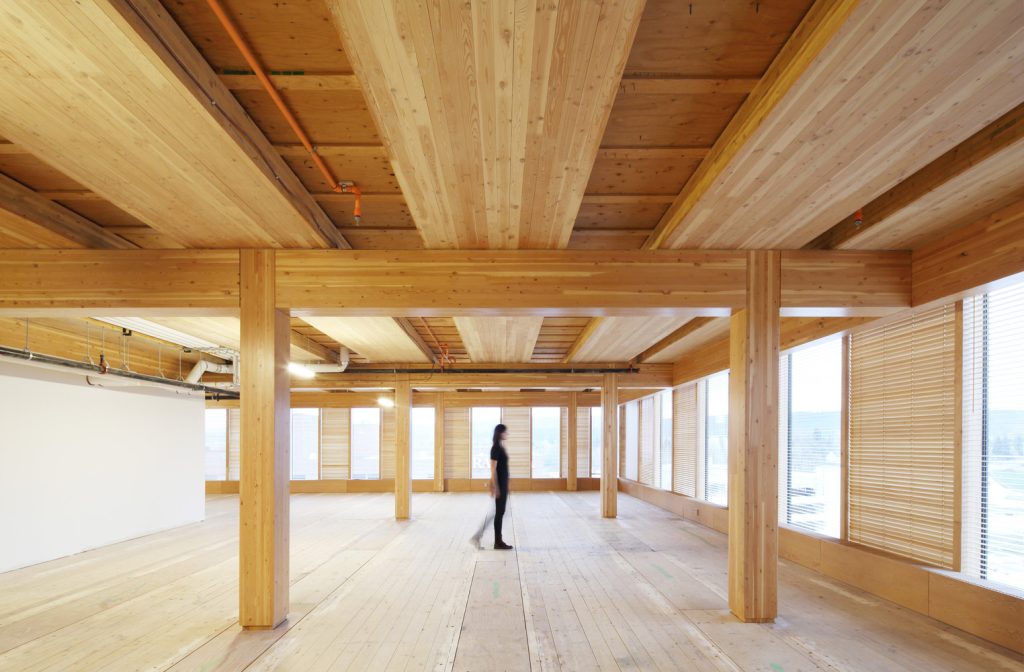
By using biobased materials, we can create a healthy, safe and nature-inclusive built environment that stores carbon reliably. The use of materials such as wood, bamboo, hemp, flax, typha, miscanthus, silphium, sorghum and mycelium in construction creates new nature-based value chains. If we ensure we accelerate this use regeneratively – prioritising ecosystem health and sustainable land management over maximum yield – biobased construction has the potential to store 1 gigaton of CO₂ this century.
Our Interventions
We need to stop using polluting construction materials, and start using bio-based materials. To accelerate this transition towards a healthy, carbon-sink built environment, Climate Cleanup creates the conditions for the regenerative use of bio-based construction materials through systemic interventions.
Construction Stored Carbon Certificates
As part of the Built by Nature & Good Energies construction-stored carbon monetisation initiative, Climate Cleanup and partners are developing a method to certify carbon storage in biobased construction materials and projects. Using this method, CSC-certificates can be issued and subsequently sold on the voluntary carbon market to generate transition finance for biobased construction.
Open Calculation Tool
We have updated our Open Calculation Tool to calculate the Net Carbon Removal Benefit of Biobased Construction projects following our new certification protocol. This tool uses validated product data and produces a printable report. The tool is open and free to use.
Bepalingsmethode Materiaalgebonden CO2-opslag
Due to the changing policy landscape on carbon storage in buildings (e.g., the EU CRCF Regulation), the Construction Stored Carbon metric as published in 2021 lacks guidance and usability for upcoming purposes. We have published a revised quantification method that is directly useable for both manual and automatic calculations, including step-by-step guidance. This “Bepalingsmethode” is currently only available in Dutch. It is useable for the Dutch Circularity Standard “Het Nieuwe Normaal” and by NMD-licenced software.
Construction Stored Carbon metric
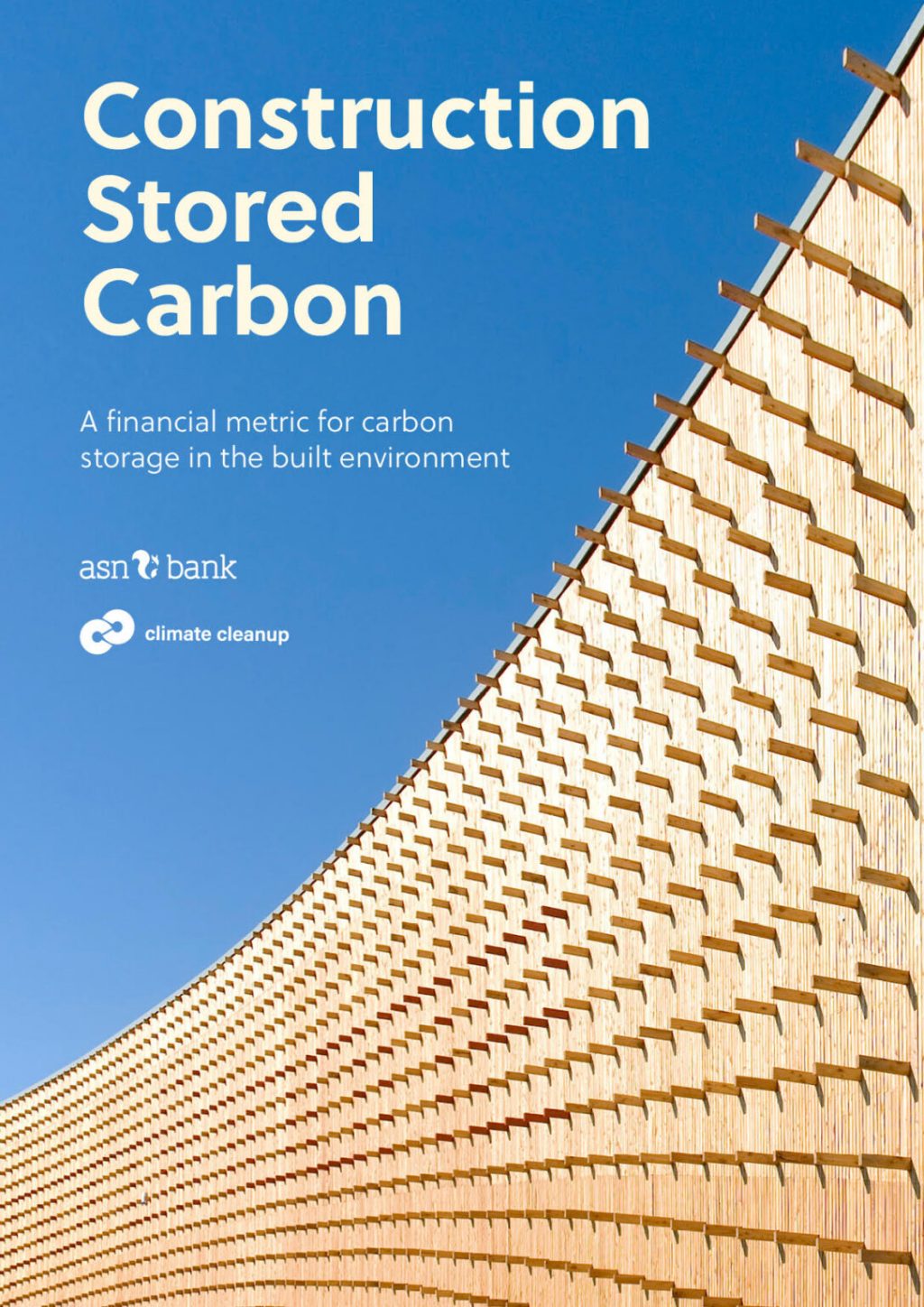
Together with ASN Bank and Gideon Building Transition Tribes, Climate Cleanup created a financial metric for carbon storage in the built environment. The metric works on a product, project and portfolio level. Complete with an extensive report, calculation tool, and 30+ calculated pioneering project cases, this intervention allows construction stakeholders to easily quantify their Construction Stored Carbon.
Bio-based comparison tool
With Holland Houtland, ASN Bank and the Province of South-Holland, we created an open and free to use web-app to compare the climate and other impacts of bio-based versus regular construction materials – all converted to numbers for the average Dutch house.
You can learn more about our intervention approach in the sprint reports, where we periodically publish results and insights from each sprint. These reports, which serve as diary entries for the entire intervention process, provide detailed information about our methods and timeline.
Join us!
Stay in the loop on our Construction Stored Carbon interventions and contribute.